

Last Updated: November 8, 2026
Quick Summary
To protect magic cards, start with three layers: sleeves against scratches, binders for flat storage, and boxes for bulk. Sleeve cards before they go into a binder, since the binder protects the page, not the card. Match the protection to card value and how often you handle the cards.
- Soft sleeves prevent surface scratches, while thicker deck sleeves are sized for shuffling and play.
- Double-sleeving adds a second barrier by placing an inner sleeve on first, then an outer sleeve.
- Use acid-free binder pages, avoid overstuffing, and prefer a zippered binder over an open three-ring binder.
- Sort cards by color and card type, picking them up by the edges on a clean, flat surface.
- Keep a simple inventory with a notebook or card scanning app to track valuable cards and their condition.
Table of Contents
- How to Store Your MTG Collection: Sleeves, Binders, and Boxes
- Best Magic Card Storage Supplies for Every Budget
- How to Sort MTG Cards in Binder Pages and Organize by Color
- Frequently Asked Questions
How to Store Your MTG Collection: Sleeves, Binders, and Boxes
To protect Magic cards, start with three layers: sleeves against scratches, binders for flat storage, and boxes for bulk.
Sleeving is the first step in protecting your magic card collection. A card sleeve is a thin plastic pocket covering the card face and edges. Soft sleeves (penny sleeves) prevent surface scratches, while thicker deck sleeves are sized for shuffling and play.
For cards worth more, double-sleeving adds a second barrier: an inner sleeve goes on first, then the card slides into an outer sleeve.
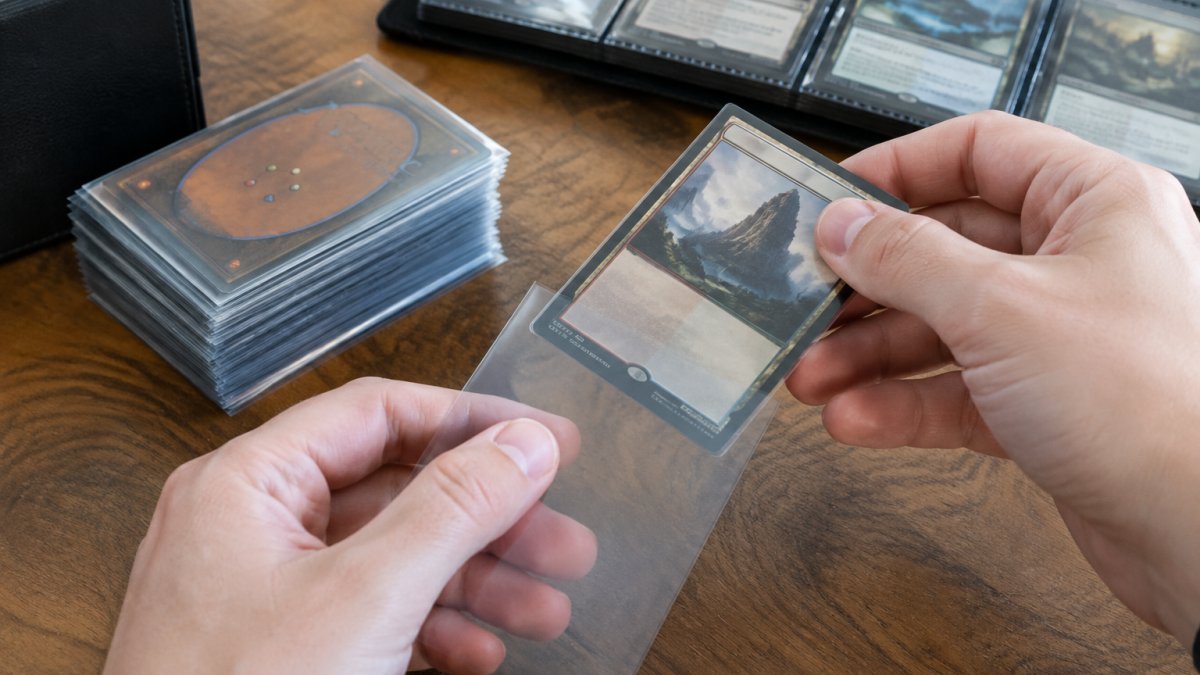
Binders keep cards flat and easy to browse. Use acid-free pages, avoid overstuffing, and prefer a zippered binder over an open three-ring binder.
Storage boxes handle bulk: a plastic trunk with a lid works well for commons and uncommons, while a lockable safe or padlocked box adds theft prevention for high-value cards.
If you want a closer look at sleeves made for foils, read our guide to protective sleeves for foils. For high-value cards, understanding card grading helps you decide what needs extra care. And if you trade or sell part of your collection, learn how to ship trading cards safely.
Best Magic Card Storage Supplies for Every Budget
Storage supplies fall into three rough tiers; the right pick depends on card value, how often you handle the cards, and where they will live. Match the protection to the risk rather than buying one "best" product.
- Budget: soft sleeves, cardboard storage boxes, and a three-ring binder with acid-free pages, fine for commons, uncommons, and bulk you sort often.
- Mid-range: deck sleeves, zippered binders, and plastic storage boxes with dividers, good for playable decks and mid-value singles you browse regularly.
- Premium: inner and outer sleeves for double-sleeving, a lockable case, and fireproof or water-resistant storage, reserve this for cards you would not want to replace.
A common mistake is buying a costly binder but skipping sleeves. The binder protects the page, not the card. Sleeve first, then store.
Match protection to value and use. Bulk can live in a lidded cardboard box, cards in active decks belong in deck sleeves inside a deck box, and valuable singles deserve double-sleeving plus flat, stable storage away from light and heat.
Watch the materials. Not all plastics are archival-safe. Look for acid-free products and avoid sleeves so snug they bow a card or scuff corners.
Watch out: storing cards in a hot car or sunny window can cause damage, and no sleeve prevents that. Stable temperature and indirect light matter as much as the sleeve.
For a deeper buyer's guide, see our breakdown of the best Magic card storage supplies.
Here is how the article's three storage tiers compare, based on card value and how often you handle the cards.
| Tier | Supplies | Best for |
|---|---|---|
| Budget | Soft sleeves, cardboard boxes, acid-free three-ring binder | Commons, uncommons, and bulk you sort often |
| Mid-range | Deck sleeves, zippered binders, plastic boxes with dividers | Playable decks and mid-value singles you browse regularly |
| Premium | Inner and outer sleeves, lockable case, fireproof or water-resistant storage | Cards you would not want to replace |
How to Sort MTG Cards in Binder Pages and Organize by Color
Sorting by color makes a binder easy to browse and helps you build decks faster. It is also when most handling wear happens, so sort with clean, dry hands on a clear, flat surface.
- Sort every card into five color piles: white, blue, black, red, green.
- Add a sixth pile for colorless and multicolor cards.
- Within each color, group by card type: creatures, instants, sorceries, and so on.
- Load each group into binder pages in a set order.
- Label the binder spine so you can find a color fast.
Handle with care while sorting. Pick cards up by the edges, not the face, and avoid sliding a card across a table. Sleeve valuable cards before they go into a pile.
Inspect and replace as you go. Check each sleeve and binder page for cracks, cloudiness, or grit before loading cards. Replace damaged sleeves and pages rather than reusing them.
Keep a simple inventory as you go, a notebook or card scanning app both work. Track valuable cards and their condition so you always know what you own and where it sits, which also helps later if you insure or appraise a collection.
Watch out: skipping the inventory step means you may rebuy cards you already have.
Your collection only stays in good shape if you protect it before damage happens. At Prismatic Spellworks, we stock singles, complete sets, and gaming supplies, with flat-rate shipping at $1.00 standard or $8 express. Search our catalog to find the cards and supplies you need.
Frequently Asked Questions
Should I store MTG cards in binders or boxes?
Use both, for different jobs. Binders suit cards you want to browse, trade, or display, and zippered binders keep dust out. Boxes suit bulk commons and uncommons, which take up too much binder space. Keep your most valuable cards in a binder or a hard case, and store bulk in a sturdy box away from heat and damp. Whichever you choose, sleeve cards before they go in.
How can I protect Magic cards from scratches, bending, and moisture?
Sleeve every card you care about, and double-sleeve foils and high-value cards for extra protection. Store binders and boxes upright, away from sunlight, radiators, and damp rooms like basements. Avoid stacking heavy objects on boxes, and handle cards by the edges to limit oils and wear. A dry, stable room with mild temperatures does more for your collection than any single product.
How do I sort MTG cards before selling or trading them?
Pull out anything valuable first, checking set, printing, finish, and condition, since those details drive what a card is worth. Sort the rest by color, then alphabetically within each color, and keep rares separate from bulk. Note condition honestly as you go. If you plan to sell or trade, a sorted, documented collection is easier to evaluate and easier to move.
